

Author of Recover Smarter Explains Why Recovery After Surgery Is Rarely a Straight Line
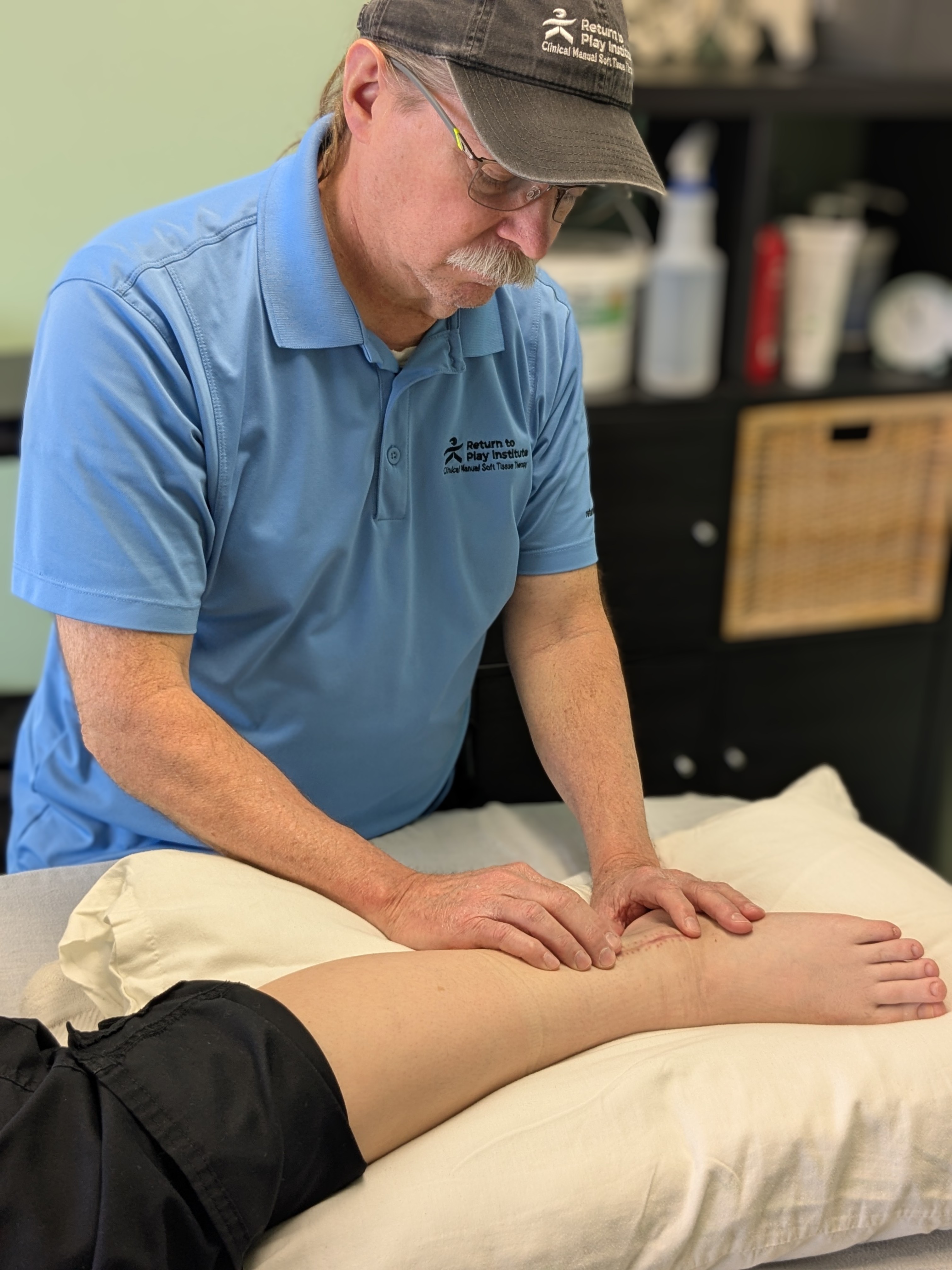
Kevin Rebman, author of Recover Smarter: The Ultimate Guide to Healing After Surgery, works with a post-surgical recovery patient at Return to Play Institute in Minnesota.
New book highlights one of the most misunderstood realities of healing after surgery: progress is not always linear.
According to Kevin Rebman, author of Recover Smarter: The Ultimate Guide to Healing After Surgery, the answer is often simpler than patients realize.
Recovery is not a straight line.
Patients frequently expect each day after surgery to bring measurable improvement. Less swelling. Less pain. More mobility. More energy. When those improvements slow, stall, or temporarily reverse, many assume something has gone wrong.
In reality, those fluctuations are often a normal part of the healing process.
"Patients were not set up to succeed in recovery, and that is not right," said Kevin Rebman, Chief Myotherapist at Return to Play Institute in Minneapolis. "Many people leave surgery expecting recovery to happen automatically. Then they experience swelling, tightness, fatigue, or stiffness weeks later and wonder if they have failed somehow. Often, they haven't."
In his recently published book, Recover Smarter, Rebman reminds readers that "progress is not always linear, and that's okay."
The statement reflects a recurring theme throughout the book: recovery is an active biological process, not a passive waiting period.
As tissues heal, collagen fibers reorganize, scar tissue matures, activity levels increase, and the nervous system adapts to changing demands. These processes do not occur in a predictable day-to-day progression. Instead, patients commonly experience periods of rapid improvement followed by plateaus, setbacks, or temporary flare-ups before continuing forward.
"We often hear about athletes who recover from major surgery in record time," Rebman explained. "Why did they recover faster? The short answer is informed decisions, perseverance, and the fact that they took an active role in their recovery plan."
Temporary changes in symptoms can be a normal part of healing. However, increasing redness, warmth, fever, unusual drainage, shortness of breath, chest pain, sudden severe swelling, or worsening pain should always be reported promptly to the surgical team.
Research supports the role of appropriate movement, nutrition, wound care, and post-operative education in creating favorable conditions for recovery and reducing certain risks associated with the healing process. Yet many patients receive detailed information about the surgery itself while receiving far less guidance about the recovery process that follows.
"Surgeons are fantastically talented at fixing things," said Rebman. "But once the surgery is over, recovery is often treated as an afterthought. Patients are told to rest, walk a little, maybe start therapy in a few weeks, and hope for the best. Recovery, like everything else in life, requires effort and attention to detail."
The result is unnecessary anxiety when healing does not follow the timeline patients expected. Patients frequently compare themselves to online before-and-after photos, social media posts, or generalized recovery timelines. When their experience differs, they often assume something is wrong.
"Most importantly, you deserve to feel empowered, not confused, about your recovery," Rebman writes in his book.
That message forms the foundation of Recover Smarter, a comprehensive guide designed to help patients understand what is happening inside the body before, during, and after healing. Covering cosmetic, orthopedic, reconstructive, oncology-related, and other surgical procedures, the book provides evidence-informed guidance on recovery phases, swelling management, scar formation, nutrition, compression, mobility, and long-term healing strategies.
"No one should feel lost, scared, or alone during surgery recovery," Rebman said. "My goal is that patients feel prepared, informed, and in control of their healing process. Recovery isn't something that happens to you. Recovery is something you actively participate in."
For more information about Recover Smarter: The Ultimate Guide to Healing After Surgery, visit books.by/methodandmythmedia.
ABOUT THE AUTHOR
Kevin Rebman, MS, BCTMB, NREMT, CDT, CNMT, is a board-certified therapist, clinical myotherapist, and founder of Return to Play Institute. Through his clinical work with post-surgical, orthopedic, oncology, and injury-recovery patients, he has helped hundreds of individuals navigate the often-overlooked challenges of healing after surgery.
ABOUT RETURN TO PLAY INSTITUTE
Return to Play Institute (www.returntoplayinstitute.com) is a Minnesota-based clinical manual soft tissue therapy practice specializing in post-surgical recovery, scar therapy, lymphatic care, injury rehabilitation, and performance-focused treatment. The clinic's mission is simple: "Feel Better. Recover Quicker. Return to Play Faster."
Kevin Rebman
Return to Play Institute, LLC
+1 763-270-9330
info@returntoplayinstitute.com
Visit us on social media:
Instagram
Facebook
YouTube
Legal Disclaimer:
EIN Presswire provides this news content "as is" without warranty of any kind. We do not accept any responsibility or liability for the accuracy, content, images, videos, licenses, completeness, legality, or reliability of the information contained in this article. If you have any complaints or copyright issues related to this article, kindly contact the author above.
